
Old garden decking can make an outdoor space feel warm, practical and inviting. It creates a place for garden furniture, summer barbecues, family gatherings, plant pots and relaxing evenings outside. But like everything exposed to British weather, decking does not last forever.
After years of rain, frost, damp, sun and daily use, timber decking can start to rot, split, sink or become dangerously slippery. Boards may feel soft underfoot, screws may loosen, and the whole structure can begin to look tired and unsafe. At that point, removing the decking is often the best decision.
Most people think mainly about the dismantling: taking up the boards, cutting sections down, removing the frame and clearing the base. But once the decking has been pulled apart, another problem quickly appears.
What do you do with all the waste?
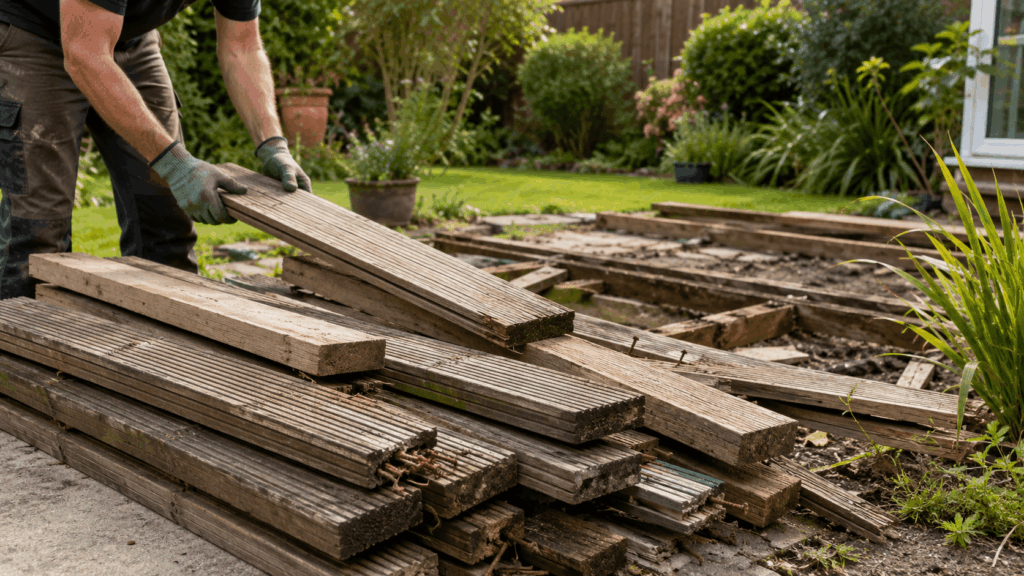
Decking removal can create much more rubbish than expected. Even a small deck can leave behind piles of timber boards, joists, posts, screws, nails, brackets, old weed membrane, plastic fixings, broken steps, handrails, rotten panels and sometimes soil, rubble or concrete from the base.
What looked like one neat garden feature can suddenly become a large, heavy and awkward pile of waste. This is why planning the clearance properly is just as important as removing the decking itself.
Decking Waste Is Not Just Ordinary Garden Waste
Many homeowners assume old decking can be treated in the same way as grass cuttings, branches or hedge trimmings. In reality, decking waste is usually much more complicated.
Timber decking may have been painted, stained, varnished or pressure treated. Some boards may be rotten or water damaged. Others may contain old screws, nails, metal fixings or traces of adhesive. Composite decking is different again because it often contains a mixture of wood fibres and plastic.
This means decking waste should not simply be thrown in with normal garden rubbish. Different materials may need to be separated and taken to the correct recycling or disposal facility.
Clean timber may be suitable for recycling or recovery, while treated, painted or contaminated wood may need a different route. Metal brackets, screws and fixings can often be separated. Plastic edging, membranes and mixed materials may need to be handled separately.
A responsible clearance is not just about removing the waste from your garden. It is about making sure it goes to the right place afterwards.
Why You Should Not Leave Old Decking Sitting in the Garden
After dismantling a deck, it can be tempting to leave the waste in a corner of the garden and deal with it later. But old decking can quickly become a problem if it is left outside for too long.
Rotten timber can become even heavier when it gets wet. Loose nails and screws can create a safety risk. Split boards can be sharp, and slippery wood can be dangerous for children, pets or anyone walking through the garden.
Old decking can also attract pests, damage the grass underneath and make the whole garden look messy and unfinished. If you have removed the deck to improve the outdoor space, leaving the waste behind defeats the purpose.
The sooner the rubbish is cleared, the sooner the garden can be used again.
Decking Waste Is Often Heavy and Awkward to Move
One of the biggest challenges with decking waste is the shape and weight of the materials. Long timber boards are difficult to carry, especially through narrow side passages or through the house. Joists and posts can be heavy, and old wet timber can weigh much more than expected.
There is also the issue of sharp fixings. Screws, nails and metal brackets can stick out from old boards, making them awkward and unsafe to handle without gloves and proper care.
Many people also underestimate how much space decking waste takes up. A small raised deck may look manageable when it is still assembled, but once dismantled, the boards and frame can easily fill a large section of the garden.
This is one of the main reasons homeowners choose professional rubbish removal instead of trying to load everything into a car or van themselves.
Why Professional Waste Collection Makes the Job Easier
Once the decking is removed, a professional rubbish removal company can collect the waste directly from the property. This saves the homeowner from lifting heavy boards, hiring a van, making trips to the tip or trying to work out which materials can go where.
This is especially useful when the decking is at the back of the garden, when there is no side access, or when the waste needs to be carried through the property carefully.
A rubbish removal company such as Snappy Rubbish Removals can help clear bulky outdoor waste, including old decking, garden rubbish, timber, broken outdoor furniture and other mixed materials. Instead of leaving the waste in the garden for days or struggling to transport it yourself, the rubbish can be loaded and removed in one visit.
For many homeowners, this is the simplest and safest way to finish the job properly.
Is Skip Hire the Best Option for Decking Waste?
For larger decking removal jobs, some people immediately think about hiring a skip. Skips can be useful for certain projects, but they are not always the most convenient option.
In London, skip hire can come with extra complications. If the skip needs to be placed on the road, you may need a council permit. There may be limited parking space, waiting times for delivery and collection, and rules about what can and cannot be placed inside the skip.
Another important point is that with skip hire, you usually have to load the waste yourself. That means carrying heavy timber boards, sharp pieces and awkward materials from the garden to the skip.
With a rubbish removal team, the labour is normally included. The team arrives, loads the waste, clears the area and takes everything away. This can be much faster and more practical, especially for domestic garden projects.
For old decking, garden clearance and mixed outdoor waste, man and van rubbish removal is often a better choice than a skip.
What If the Decking Is Mixed With Other Garden Waste?
Decking removal often reveals other rubbish that has been hidden for years. Once the structure is lifted, you may find broken paving slabs, old plant pots, plastic sheeting, bags of soil, damaged fencing, rubble, bricks, weeds, rotten timber or general garden junk.
This is very common. Many people remove decking as part of a bigger garden improvement project, so the waste is rarely just timber.
A professional collection can often include different types of non-hazardous waste in the same job. This means the old decking, surrounding garden rubbish and other unwanted outdoor items can be cleared together, leaving the space ready for the next stage.
Whether you are planning new turf, paving, gravel, a patio, artificial grass or a fresh garden layout, removing all the waste first gives you a clean starting point.
Preparing Decking Waste for Collection
If you are dismantling the decking yourself, a little preparation can make the collection quicker, safer and more cost-effective.
Stack the timber boards neatly in one area if possible. Keep long boards together and separate smaller pieces where you can. If there are nails or screws sticking out, place the boards carefully so nobody steps on them or catches themselves while walking past.
Metal brackets and fixings can be kept in a separate container or pile. General garden waste, rubble, soil and plastic materials should also be separated where possible.
Try not to overload bags with heavy materials. Soil, stones, tiles and wet timber can become extremely heavy very quickly.
Before booking a collection, take a few clear photos of the waste. Include the whole pile, any heavy items and the access route from the garden to the road. This helps the rubbish removal company estimate the size of the load and send the right team.
Access Matters More Than People Think
Access can make a big difference to a decking waste collection. If the waste is at the front of the property, the job is usually straightforward. But if the decking is at the back of a long garden, through a narrow side gate, down steps or through the house, the collection may take longer.
It is always best to explain the access clearly when booking. Mention if there are stairs, restricted parking, no side access, long carrying distances or fragile flooring inside the property.
Good communication helps avoid surprises and allows the team to prepare properly.
Responsible Disposal Is Part of the Job
Decking removal is not just about getting rid of old timber. It is also about dealing with the waste responsibly.
Where possible, materials should be separated for recycling or recovery. Timber, metal and other materials may be diverted from landfill if handled correctly. Treated or mixed waste should be taken through the proper disposal channels.
Using a professional rubbish removal companies like Snappy or Express Waste Removals gives you more confidence that the waste is not simply being dumped. This is important because homeowners have a duty to make sure their rubbish is passed to a legitimate waste carrier.
A responsible company will understand how to handle different types of waste and where to take them.
A Clear Garden Is the Real Finish
Removing old decking can completely change the feel of a garden. It can make the space look bigger, safer and cleaner. It can also create new possibilities: a fresh lawn, a paved seating area, a flower bed, a children’s play space, a new shed base or a more modern outdoor design.
But the project does not feel finished while the old decking is still sitting in a pile.
Once the waste is cleared, the garden finally feels ready for its next stage. You can see the space properly, plan the layout and start improving the area without old boards and broken timber in the way.
Whether the decking is rotten, damaged, outdated or simply no longer needed, arranging proper waste collection is one of the most important steps in the process.
A professional waste removal company can help remove leftover decking waste quickly and safely, giving homeowners a practical way to clear the garden without hiring a skip or struggling with heavy timber themselves.
Old decking can be messy, heavy and difficult to handle, but with the right clearance plan, the whole project becomes much easier. The deck may be gone, but once the waste is removed too, your garden can finally move forward.